
5. Cepheid Variable Stars
 source: astro.princeton.edu
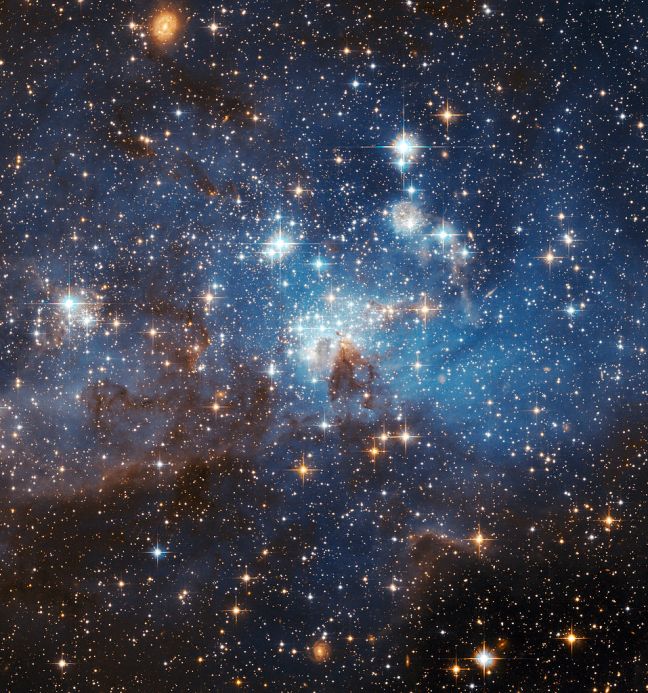
What are they? Stars that pulsate so that the diameter and temperature change over time. This means that the brightness (or luminosity) changes at regular intervals. In the early 1900s, Henrietta Leavitt discovered that period of oscillation is related to the luminosity, with brighter stars having a longer period.
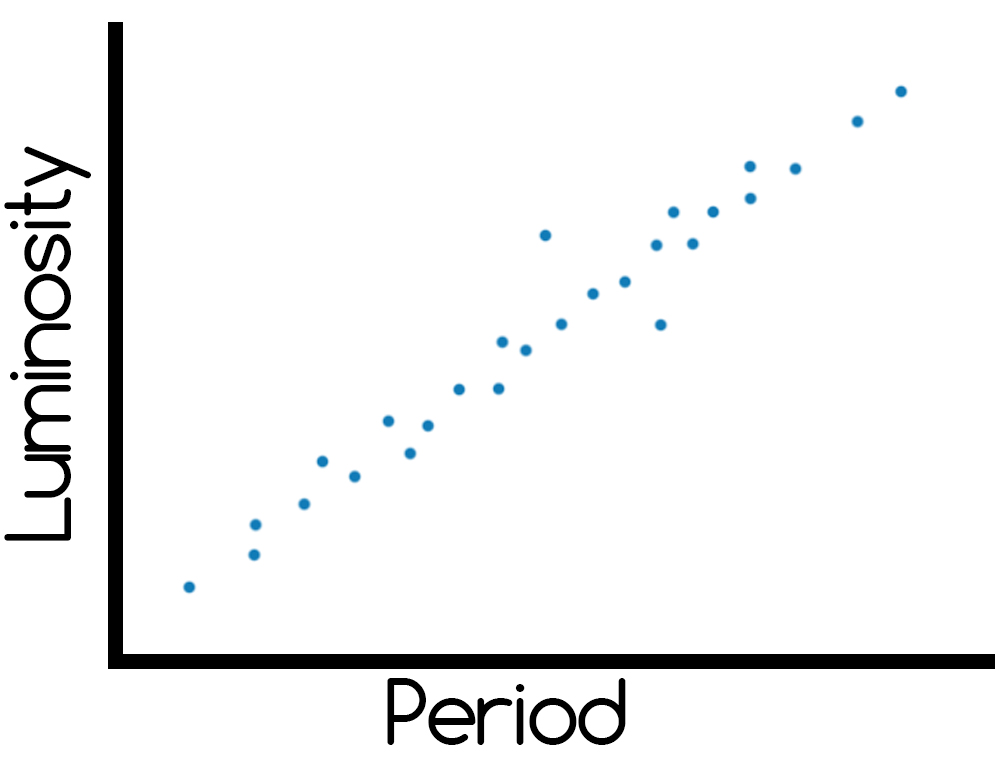 Why are they cool? We can use them to measure great distances in space. By carefully observing distant Cepheid variables, it is easy to measure the period. Using the relationship above, astronomers can then determine the luminosity of that star. By comparing the actual brightness to the brightness that we observe, astronomers can estimate how far away it is. Awesome.
4. Black Holes

What are they? When the mass of a very large star collapses in on itself a black hole is formed. Black holes occupy a small volume but have a huge mass. The force of gravity is so strong that nothing, not even light, can escape it’s pull. We cannot directly observe a black hole but we can see how it affects the objects around it (like the simulation of a black hole ripping apart a star shown above).
Why are they cool? Two words, event horizon. This is the point of no return of the black hole, once something crosses that boundary it is never coming back (or at least in any useful form). The physics at the event horizon is super cool, dealing with extreme relativistic effects and spaghettification of an object.
3. Supernovae
 source: spaceplasma.tumblr.com
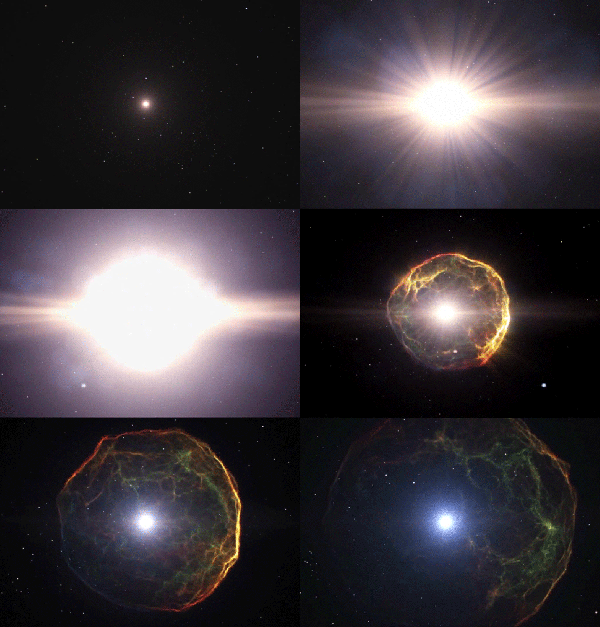
What are they? When a very large star explodes it will release approximately 1044 Joules of energy (equivalent to the energy released by the explosions in 1037 Michael Bay movies). With that much energy being released, supernovas are briefly more luminous than an entire galaxy.
Why are they cool? With this level of energy, heavier elements can be created through nuclear fusion. The heavy elements that make up our bodies like oxygen, carbon and nitrogen, would have been formed in a supernova a long time ago. You’re a star!
2. Extra-solar Planets
 source: spit.rif.edu
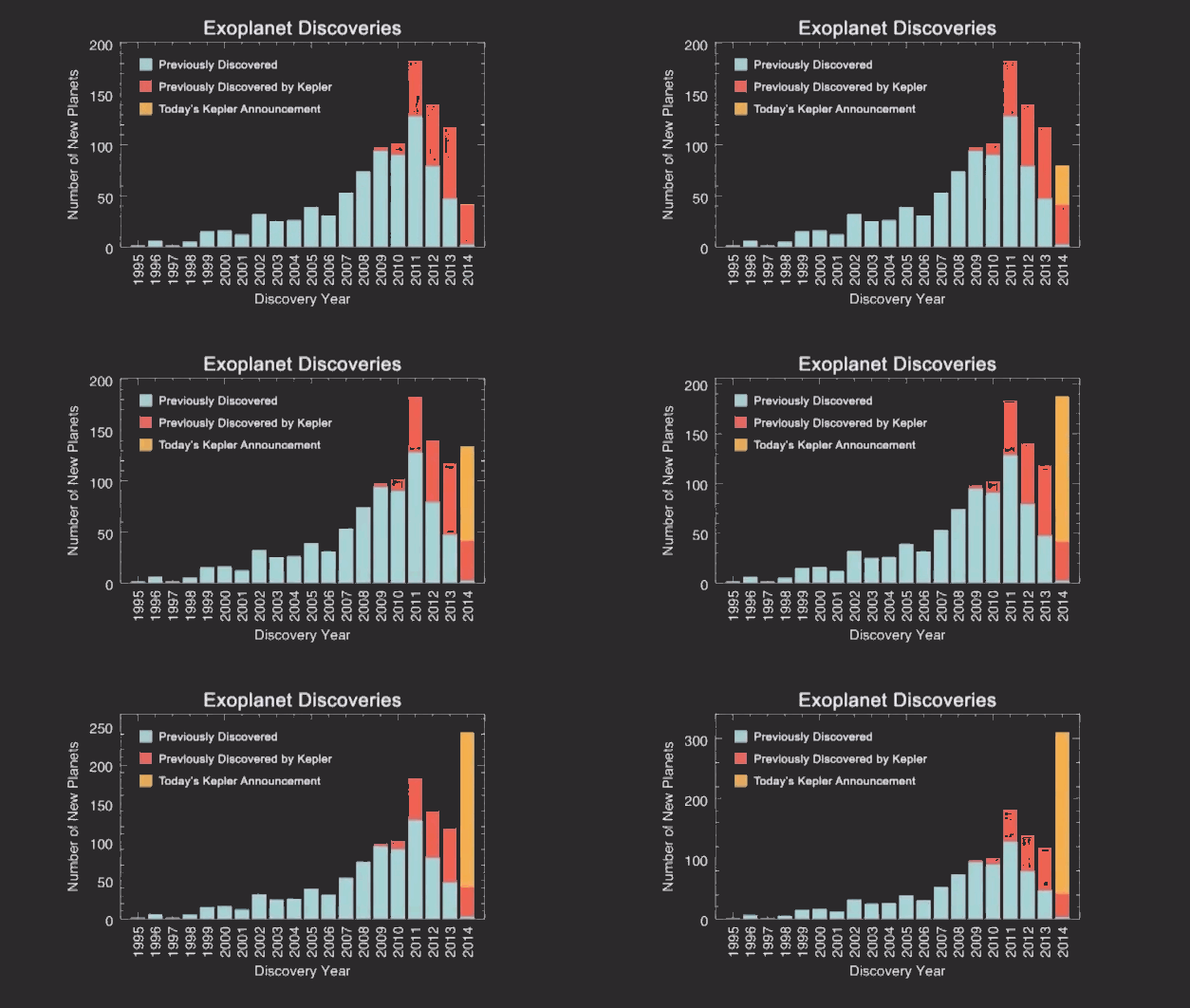
What are they? These are planets that orbit around a star that is not the Sun. They are difficult to detect, especially the smaller ones. One way they can be detected is by observing the slight change in brightness as they pass in front of a star. The Kepler Spacecraft has confirmed detection of over 1,000 exoplanets and that number is growing.
 source: NASA
Why are they cool? Of the 1,000 exoplanets detected by Kepler, twelve of them are planets that are less that twice the size of Earth and orbit in the habitable zone. From this data, it seems like planets are fairly common, which leads to the question, how common is life on those planets? I’m dying to know.
1. Millisecond Pulsars
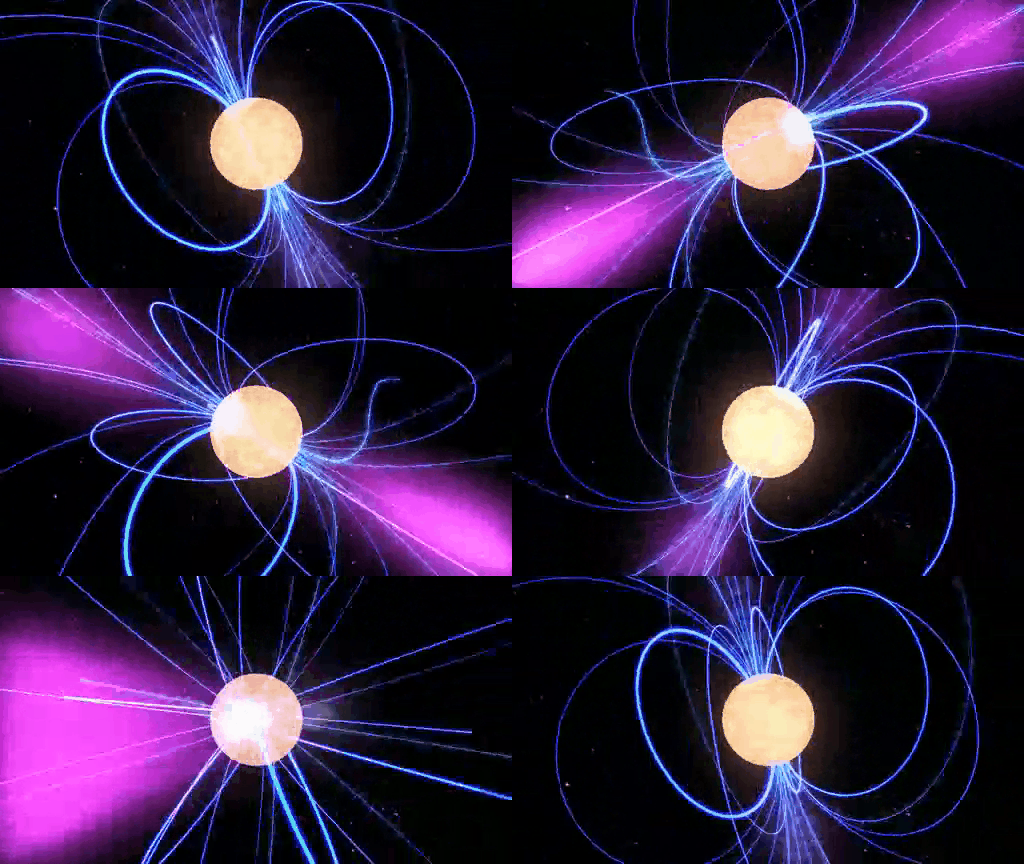 source: http://holographicgalaxy.blogspot.com
What are they? They are super dense neutron stars that are rotating approximately 1,000 times per second. They have strong magnetic fields and emit a beam of radiation in the x-ray portion of the spectrum. We can detect these objects if the beam of radiation is directed towards the Earth.
Why are they cool? Where do I begin? First these things are made almost entirely of neutrons, which is cool. They have approximately the same mass of the Sun but are only the size of a large city, which is also cool. They emit x-rays, super cool. Finally, they rotate 1,000 times per second, and you can’t get much cooler than that.
 The Physics Boss